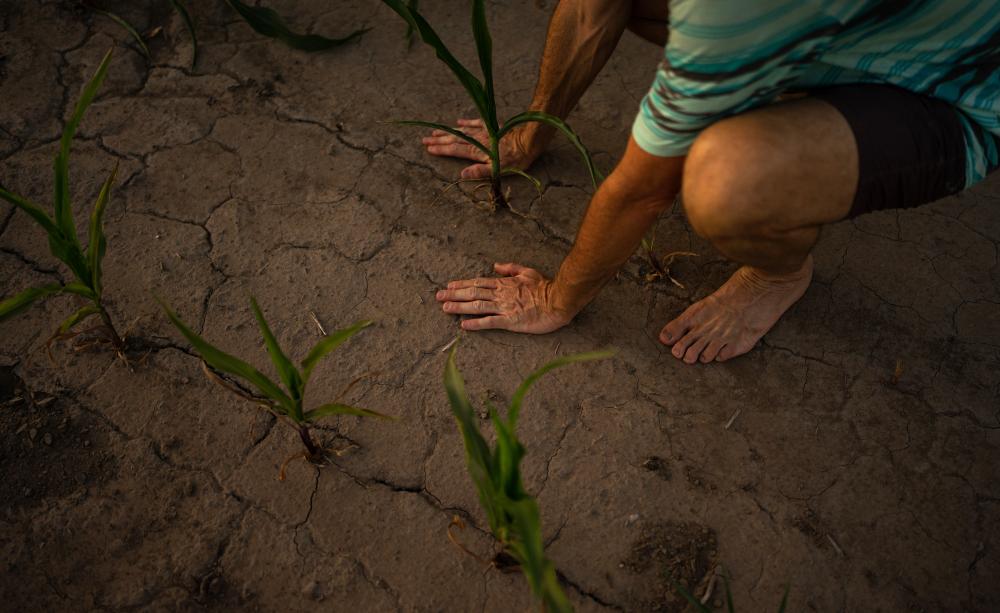
Farmer Javier Sanchez checks corn plants on a cracked soil as severe heat and drought affected his fields on March 12, 2023 in Timbúes, Santa Fe, Argentina. Photo by Sebastian Lopez Brach/Getty Images.
‘The diet we feed our soil determines the diet that soil feeds us.’
Gut health is in vogue, and rightly so. The microbes that we eat form an entire eco-system of individual, yet interdependent organisms in our stomach.
These work together to regulate our hormones, digest our food, support our water retention and protect against pathogens.
Protein
Our gut’s health is not governed by volume of bacteria, but diversity. The greater the variety of microbial bacteria found in our gut, the more effective that tiny eco-system becomes.
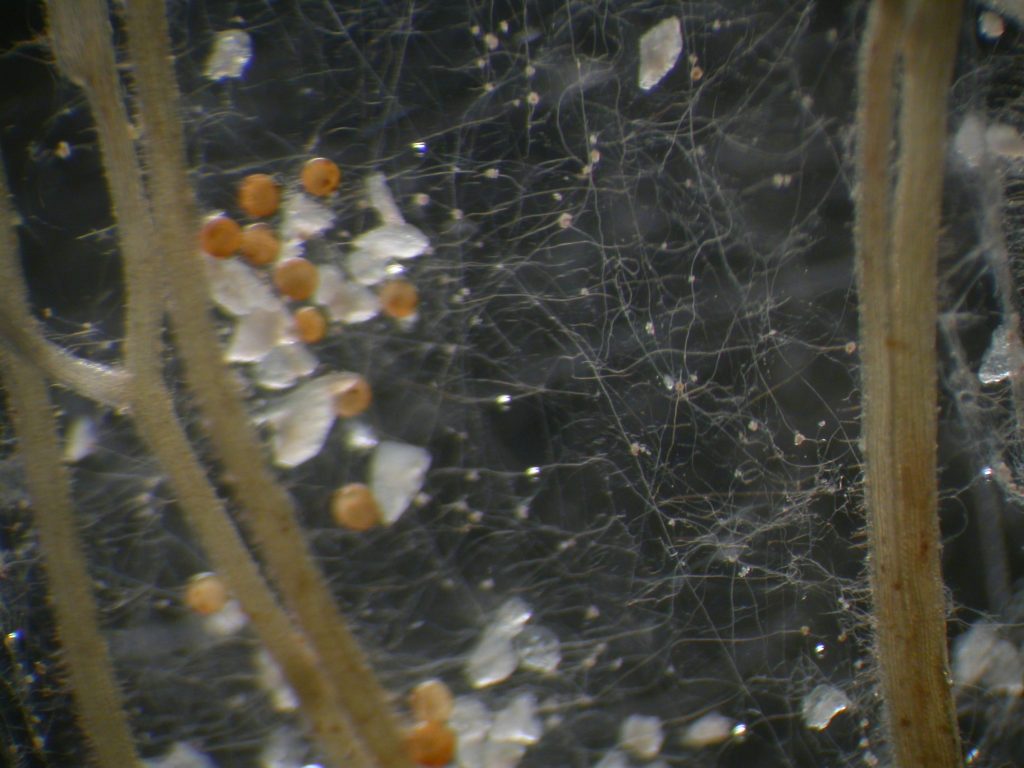
Yet microbial life behaves in similar ways, regardless of the host. Just as your stomach can’t absorb the nutrients it needs without a working community of gut bacteria, a plant cannot absorb nitrogen, phosphorus or trace minerals from organic matter without a working community of soil microbes.
The plant pays its microbes in root sugars, while the microbes pay the plant in nutrients it could never reach alone.
This complex, underground system of trade governs the nutrient density of the food that soil produces. In short, the diet we feed our soil determines the diet that soil feeds us.
Research confirms this. Landmark research comparing United States nutrient data from 1950 to 1999 found measurable declines in the protein, calcium, phosphorus, iron and riboflavin content of 43 common crops.